
Build the abilities for higher-level gymnastics
Successfully performing these exercises with correct technique demonstrates potential for higher-level gymnastics. Clean repetitions, controlled positions, and complete holds show the strength and body control needed to progress toward more difficult skills.
We look for athletes who can achieve these abilities by age 10. However, achieving them at any age is highly beneficial for learning upper-level skills. We have seen athletes accomplish these standards as young as age 7. Demonstrating these abilities early gives gymnasts a strong physical foundation to build on as their skills become more demanding.
Strength training is part of every practice, and consistent practice at home can greatly enhance that development. Additional opportunities to work on these exercises help athletes build the strength and control needed to perform them successfully.
Parents can support this progress by encouraging complete movements, careful technique, and consistency. Each additional clean repetition or second held with correct form shows that your gymnast’s abilities are growing.
Scoring colors
Blue is the minimum expectation. Green is the goal for every athlete.
- RedBuild the FoundationThis test needs focused practice.
- YellowApproaching the StandardYou’re making progress toward the minimum expectation.
- BlueMeets the StandardYou’ve reached the minimum expectation.
- GreenReaches the GoalYou’ve achieved the target for this test.
Upper Body & Core Strength
Pull-Ups
Grip the bar overhand and start with your arms fully extended. Pull until your chin clears the bar, then lower all the way back to a straight-arm hang.
Scoring key · Clean reps in 30 seconds
- 0Build the Foundation
- 1–3Build the Foundation
- 4–6Approaching the Standard
- 7–9Meets the Standard
- 10+Reaches the Goal
Reps with swinging or a break in form do not count.
Push-Ups
Start in a straight-body front support. Bend your elbows to 90° and press back up. Keep your hips and shoulders moving together.
Scoring key · Clean reps in 30 seconds
- 0Build the Foundation
- 1–8Build the Foundation
- 9–16Approaching the Standard
- 17–24Meets the Standard
- 25+Reaches the Goal
Leg Lifts
Hang from stall bars or use the test setup with a flat support behind your back. Keep both knees straight as you raise your feet to the bar or your hands. Lower back to a vertical hang.
Scoring key · Clean reps in 30 seconds
- 0Build the Foundation
- 1–5Build the Foundation
- 6–10Approaching the Standard
- 11–15Meets the Standard
- 16+Reaches the Goal
Hollow Body Hold
Lie on your back. Reach your arms beside your ears, point your toes, and lift your shoulders and straight legs while keeping your lower back pressed into the mat.
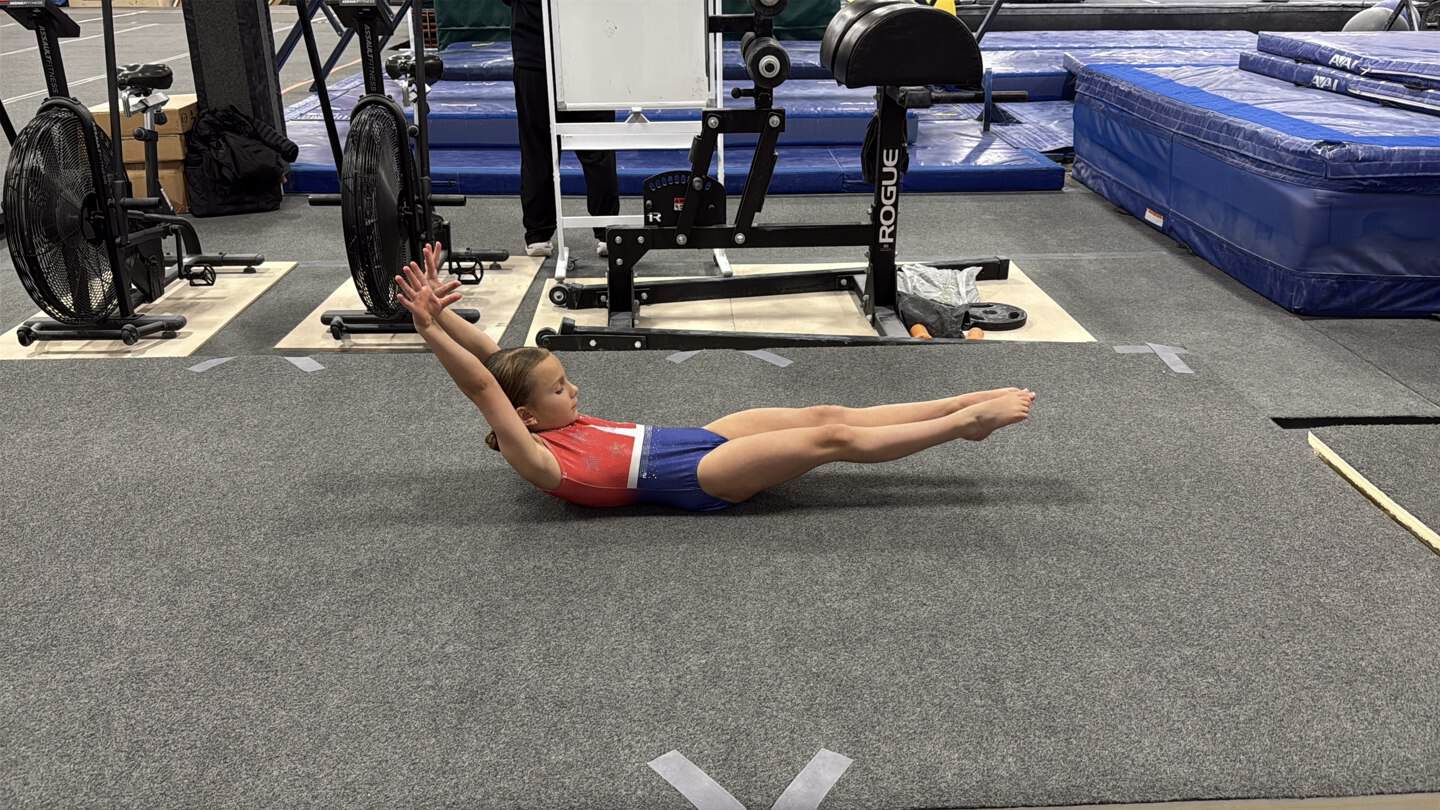
Scoring key · Hold with correct form
- Needs workBuild the Foundation
- 30 secondsApproaching the Standard
- 45 secondsMeets the Standard
- 60 secondsReaches the Goal
Arch Body Hold
Lie face down and reach your arms forward. Lift your chest, arms, and thighs together, and keep them raised as you hold.
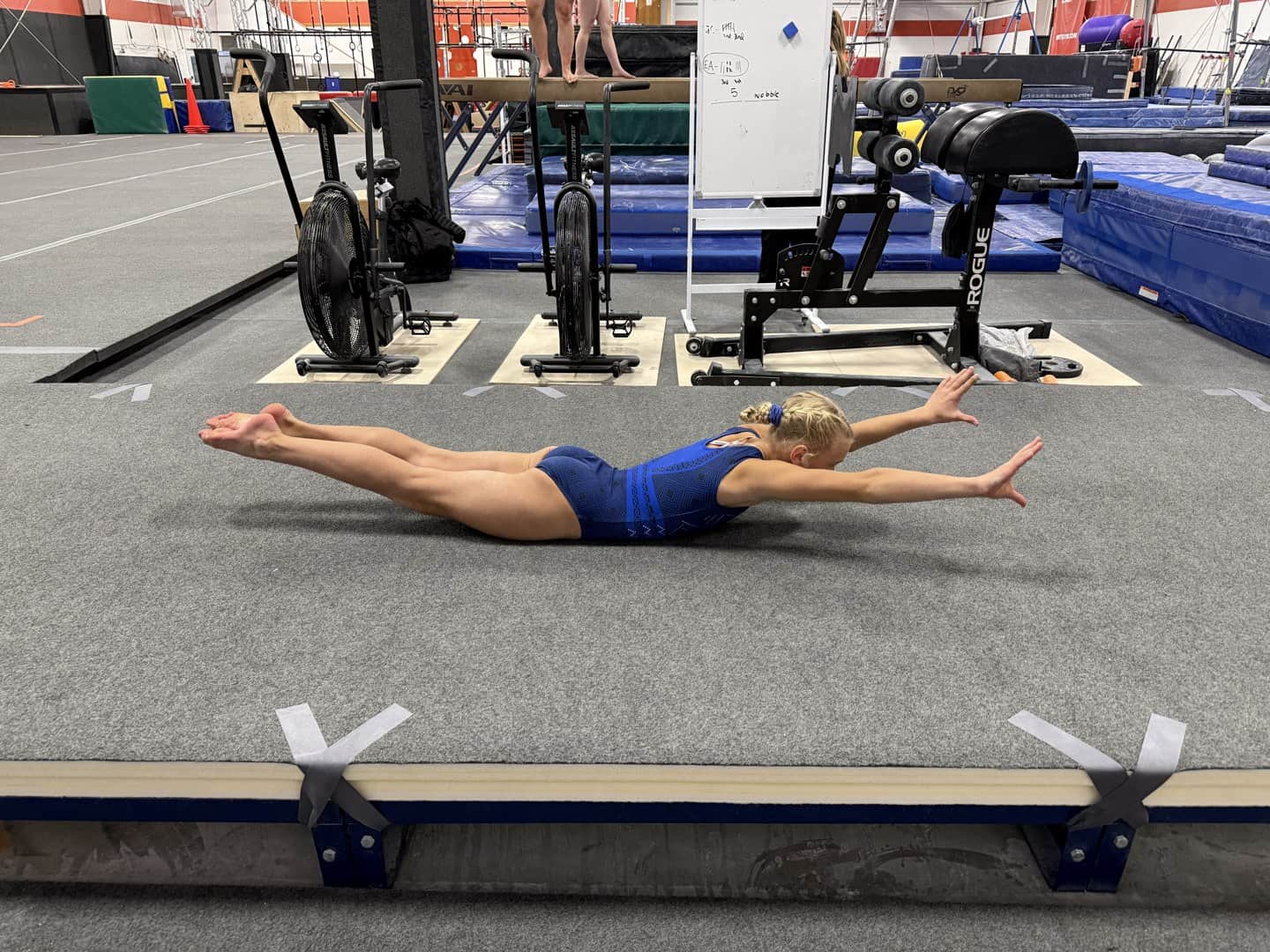
Scoring key · Hold with correct form
- Needs workBuild the Foundation
- 30 secondsApproaching the Standard
- 45 secondsMeets the Standard
- 60 secondsReaches the Goal
Lower Body Power & Speed
20-Meter Sprint
Start from a standstill. Accelerate down the marked 20-meter course and sprint through the finish. The gym uses OVR Sprint timing gates on a vault runway or a clear lane.
Scoring key · Sprint time
- Exact time in seconds
The timing gates measure to 0.001 seconds. This measurement has no color tier in the tracker.
Vertical Jump
Stand flat-footed between the OVR Jump sensors. Jump straight up as high as you can and land back between the sensors.
Scoring key · Jump height
- Exact height
Record the height displayed by the OVR Jump sensors. This measurement has no color tier in the tracker.
Gymnastics Elements
Straight-Body Casting
Start in front support on a single bar. Cast to your highest controlled angle with a straight body, then return to the bar. A cast that tips over past handstand does not count. You get one retry if that happens.
Scoring key · Highest controlled cast
- Below horizontalBuild the Foundation
- HorizontalApproaching the Standard
- 30°Approaching the Standard
- 45°Meets the Standard
- 2x 45°Meets the Standard
- HandstandReaches the Goal
- 2x handstandReaches the Goal
Press Handstand
Start in a standing straddle or a seated straddle-L. Press up to a handstand and lower back down. Keep your hands planted throughout.
Scoring key · Press handstand result
- 0Build the Foundation
- Feet to HSApproaching the Standard
- Straddle to HSMeets the Standard
- 1 full pressReaches the Goal
- 2+ full pressesReaches the Goal
HS stands for handstand.
Handstand Hold
Kick up to a freestanding handstand on the floor. Open your shoulders and hold a straight body line.
Scoring key · Freestanding hold time
- 0–5 sec.Build the Foundation
- 6–15 sec.Approaching the Standard
- 16–25 sec.Meets the Standard
- 26–30 sec.Reaches the Goal
The timer stops when you step out or reach 30 seconds.
Flexibility
Right, Left, and Center Splits
Show a right split, a left split, and a center split. Keep your hips square, knees straight, and toes pointed.
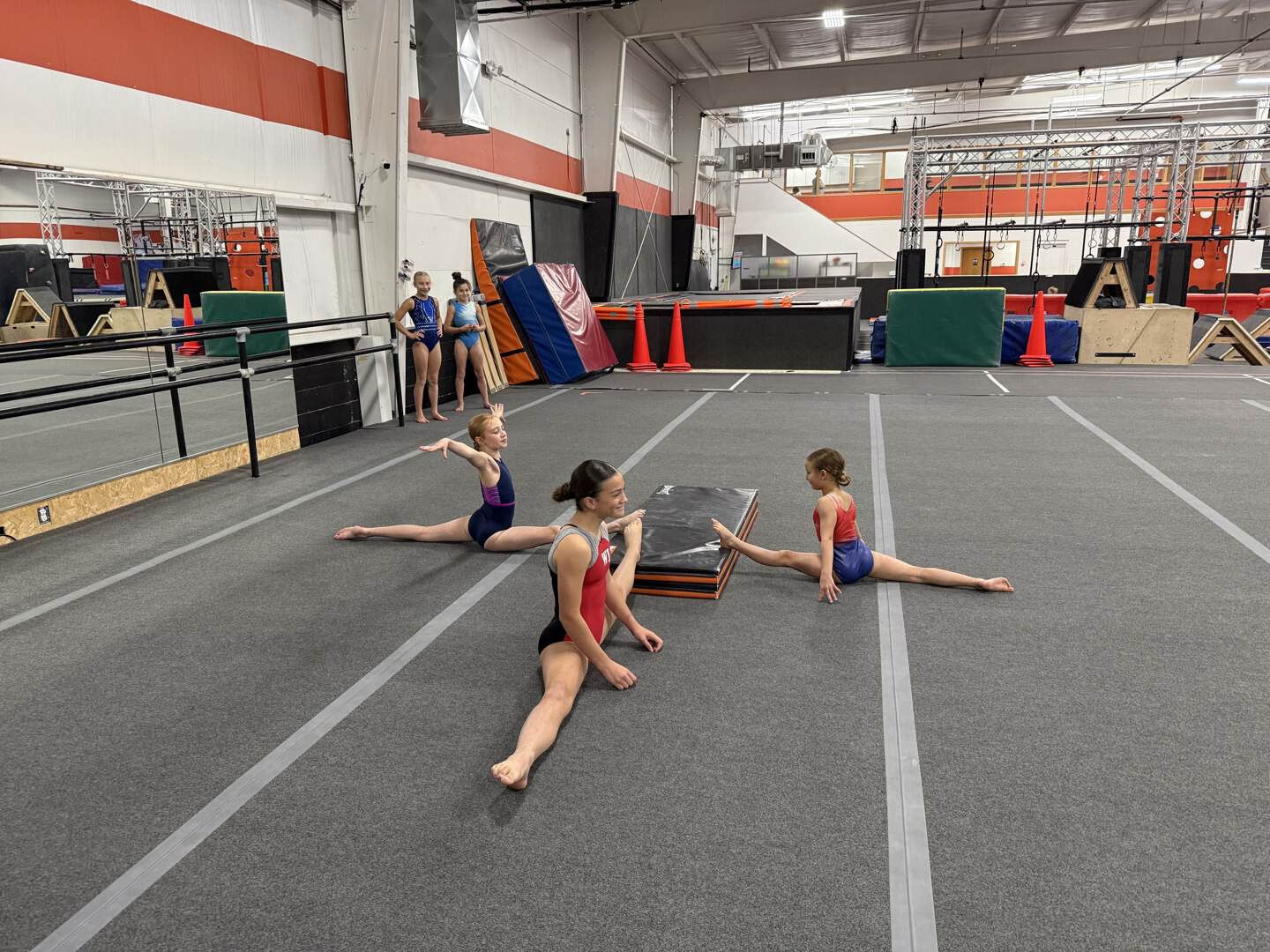
Scoring key · Score right, left, and center splits individually
- Needs workBuild the Foundation
- DownMeets the Standard
- OversplitReaches the Goal
Down means flat on the floor. For a front oversplit, the front leg is elevated.
Shoulder Flexibility
Push up into a bridge. Straighten your arms, straighten your legs if you can, and open your shoulders so they move toward or beyond your hands.
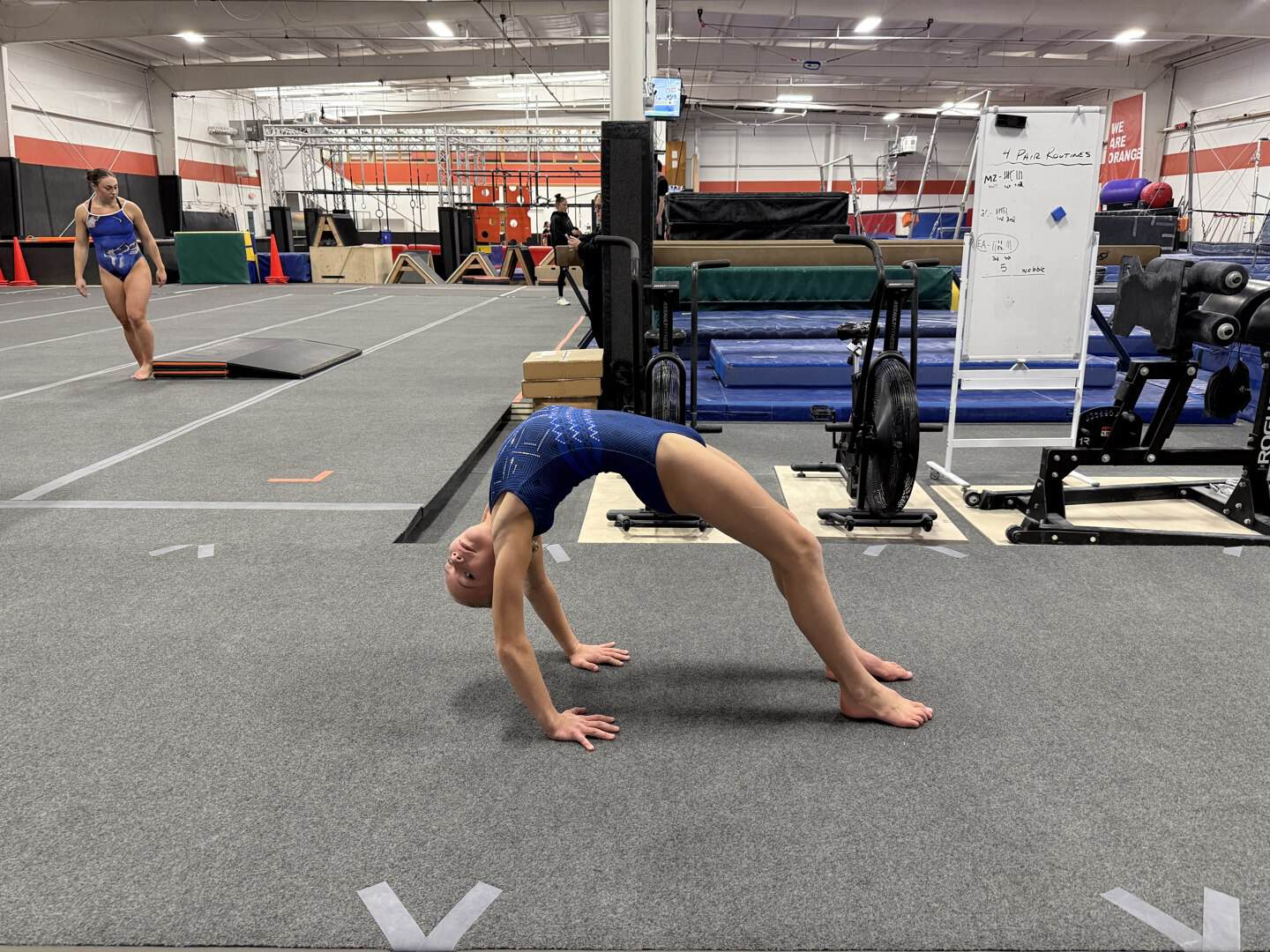
Scoring key · Shoulder position in the bridge
- Needs workBuild the Foundation
- Over handsMeets the Standard
- Past handsReaches the Goal
Needs work means your shoulders are behind your hands.
Pike Flexibility
Stand with straight knees and fold forward from your hips. Reach both palms toward the floor without bending your knees.
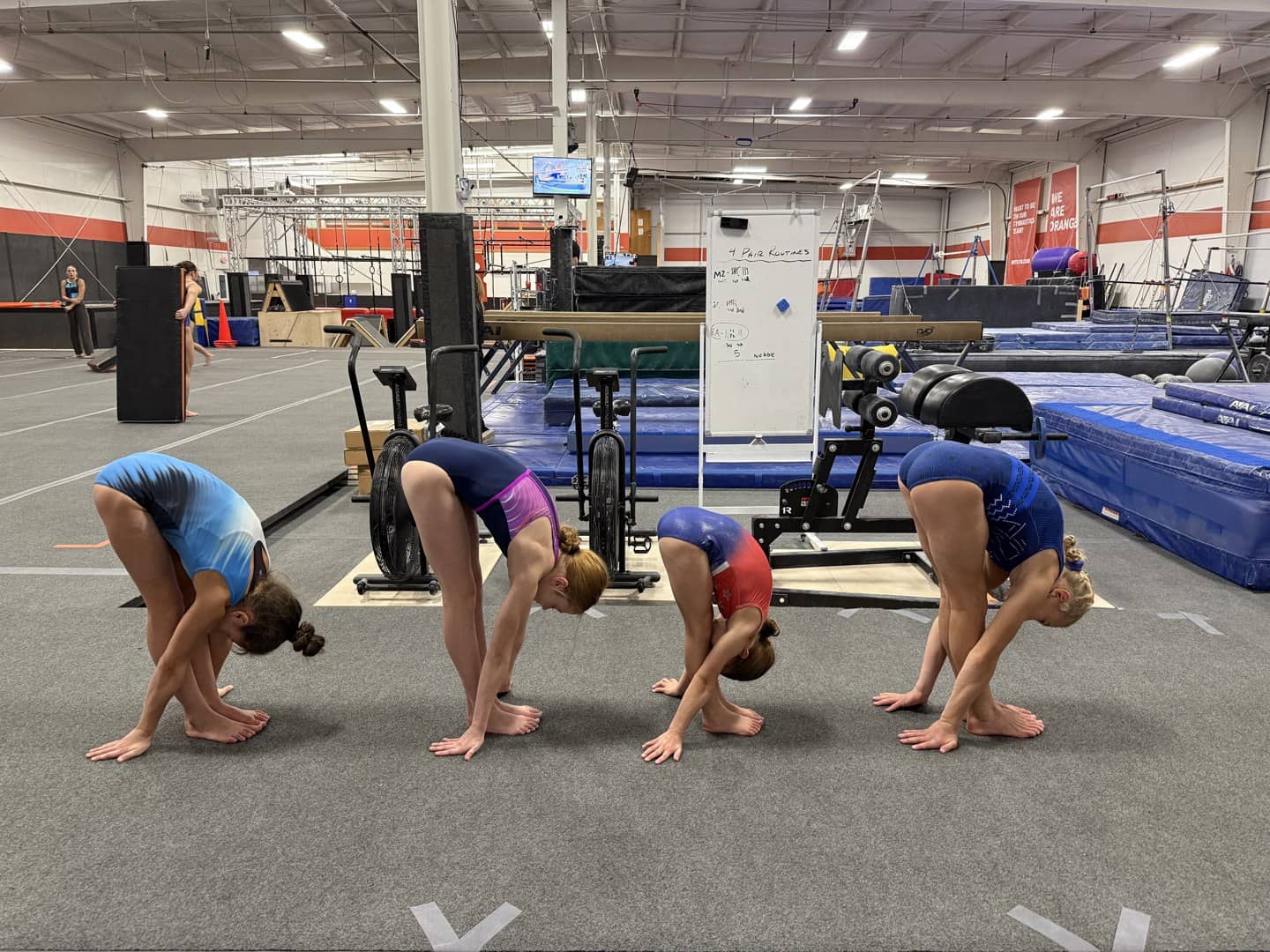
Scoring key · Hand position with straight knees
- Needs workBuild the Foundation
- Hands flatMeets the Standard
- Hands behindReaches the Goal
Hands behind means both palms are flat on the floor behind your heels.