
Parent supervision required. A parent must supervise the athlete at all times while they use any of the home equipment in this guide.
Start with room to move. The most useful gymnastics work at home is usually strength, flexibility, and balance. A clear floor and a few exercises from your coach can give your gymnast plenty to work on.
We generally don’t recommend buying gymnastics apparatus for home skill practice. If you’re considering equipment, here’s what we’d look for and what we’d skip.
Compare equipment
Panel mat
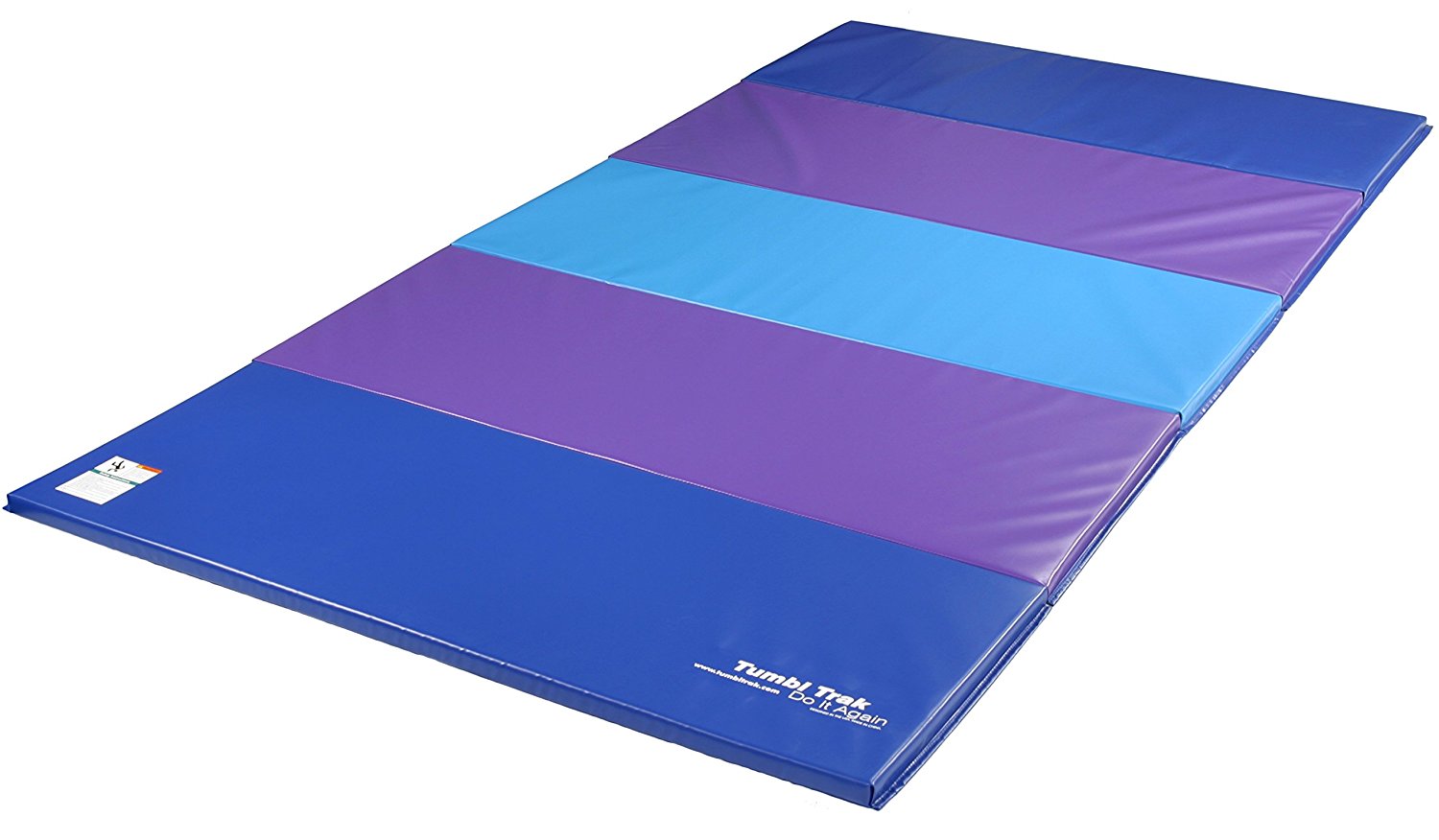
In the gym, we usually fold or stack panel mats as blocks for coached drills. Unfolded, they’re still firm and provide light floor padding. For home use, we recommend 4 × 8 ft at 1⅜ in thick. Choose the 5 × 10 ft version if you want more room.
For outdoor conditioning or balance work, a clear patch of dry, level grass can give kids more room to move. Save tumbling and landing practice for the gym.
Incline mat or foam wedge

A small wedge has limited use beyond beginner backward-roll progressions in the gym. If your coach has a specific use in mind, our smallest pick is the 30 in wide × 68 in long × 16 in high Tumbl Trak folding incline. Check the fit for your gymnast and ask which drills to use before buying.
Foam beam
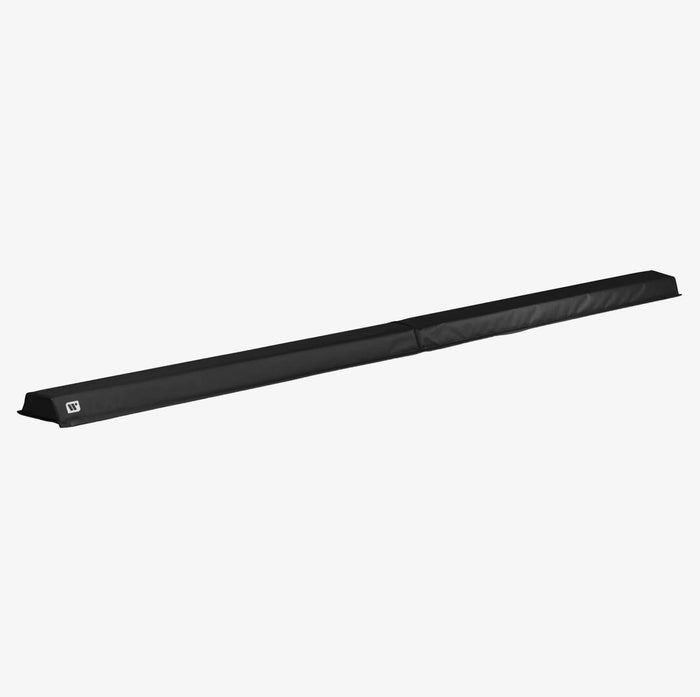
A line on the floor is our first choice for everyday balance and foot placement. If you’re buying a beam as a gift, choose a ground-level foam beam with a stable, nonslip base. Keep it to familiar steps and balance holds with clear space on both sides.
Floor beam

Another simple choice is the Addie Beam with its standard low feet. The suede-covered surface sits about 5¼ inches off the floor. It comes in 4 ft and 8 ft lengths. For home use, stick with the low feet and follow Tumbl Trak’s matting guidance.
Floor bar

The Tumbl Trak Floor Bar has a 48-inch beechwood rail that sits about 2¼ inches off the floor, with padded steel ends. Use it for coach-assigned grip and body-shape drills. Set it on compatible closed-loop carpet so the hook-and-loop bases can grip, and check that it stays put before use.
Low parallettes

A low pair works well for coach-assigned press drills and handstand holds. Place both bars on a firm, level surface and check that neither rocks or slides before the athlete puts weight on them. A parent must supervise throughout.
The compact Kensui PRO sits about 2¾ inches high. The Tumbl Trak pair shown here sits 3½ inches high and has longer, 12-inch rails.
Kensui YinYang PRO Wooden Parallettes
Tumbl Trak Portable Parallette Bars
Junior training bar

We recommend skipping junior bars for home gymnastics practice. Save swings, kips, circles, and dismounts for the gym. If you still plan to buy one, use an established gymnastics supplier such as Tumbl Trak. Check the model’s limits, required matting, and clearances. Follow the setup instructions and ask your coach about any intended use.
Mounted pull-up bar
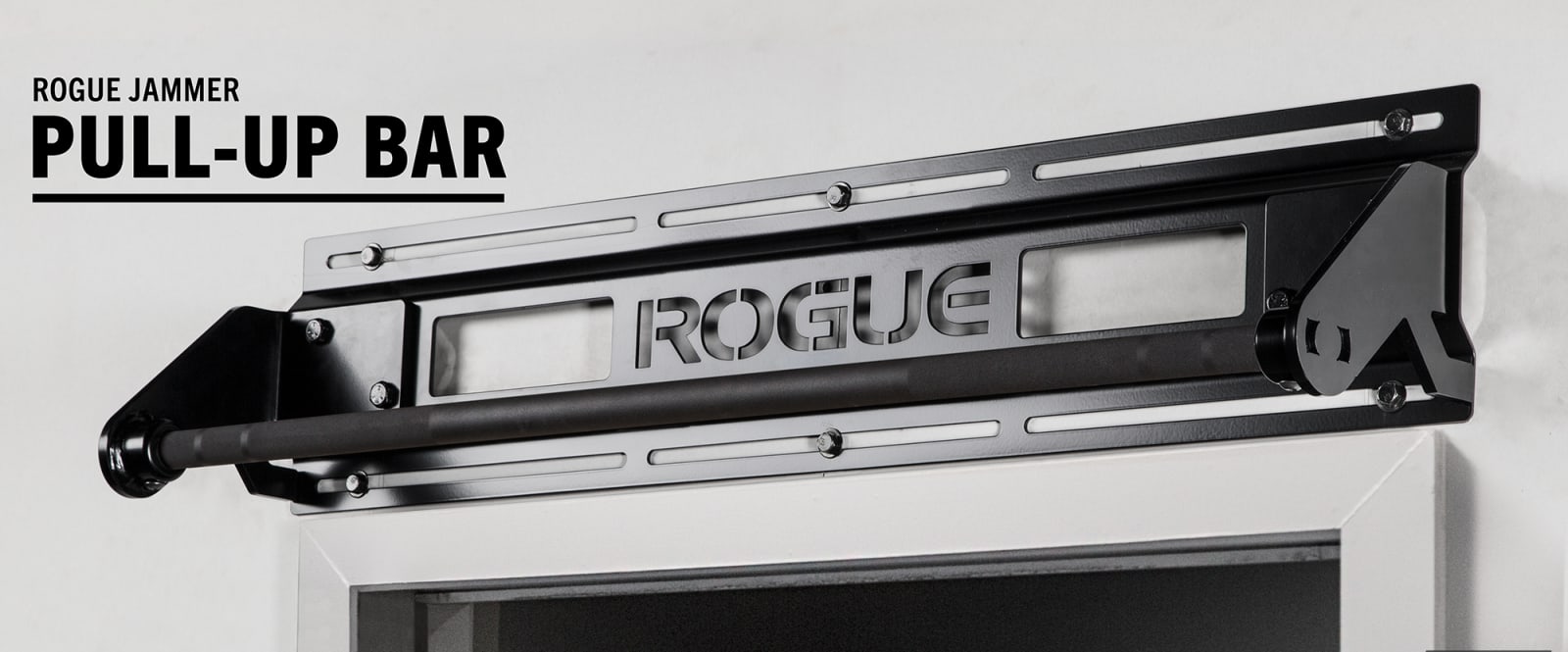
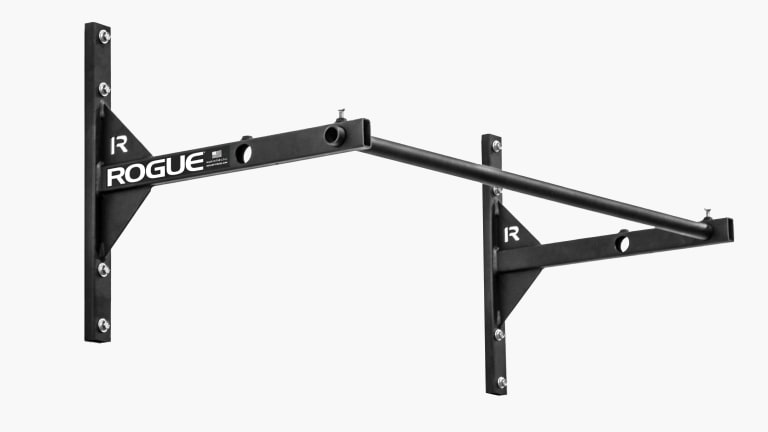
For coach-assigned strength work, these are our two preferred options. Use a bar only after it’s securely installed according to Rogue’s instructions, with enough room around and below it. Use it for controlled hangs or pull-ups. Save swinging and gymnastics bar skills for the gym.
- Above a doorway. The Rogue Jammer Pull-up Bar mounts to the wall above the door.
- Wall or ceiling. The Rogue P-5V Garage Pull-Up System can mount to a wall or ceiling. The system ships without mounting hardware.
Inflatable air floor

An air floor, also sold as an air track, adds rebound. We’d skip it unless your coach has a specific drill in mind and you have room around the sides, ends, and overhead. If you shop on Amazon, check the inflated dimensions, pump, pressure instructions, and return policy. Keep flips and tumbling passes at the gym.